Fitzpatrick Scale-Based Method for Eye Color Classification
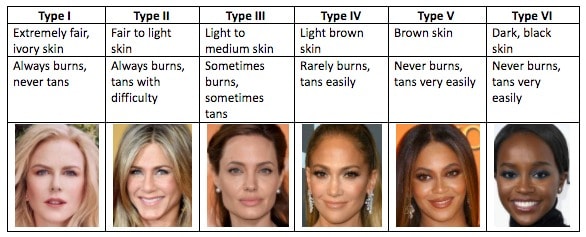
The Fitzpatrick scale is a classification system originally developed in 1975 by dermatologist Thomas B. Fitzpatrick. Its primary purpose is to categorize how different skin types react to sunlight—particularly whether a person is prone to burning or capable of tanning. Although this scale primarily addresses skin’s response to UV radiation, it often includes typical (but not absolute) associations with eye and hair color.Below is a generalized overview of each Fitzpatrick skin type, including common tendencies regarding sun exposure, eye color, and hair color. Keep in mind that these associations are statistical norms rather than strict rules, and individual variations are common.Fitzpatrick Skin Types and Common Eye/Hair ColorsSkin TypeReaction to SunTypical Eye ColorTypical Hair ColorIAlways burns, rarely or never tans; often has freckles. Very fair skin.Blue, green, or light grayVery light (blonde) or redIIUsually burns, sometimes tans lightly. Fair skin.Blue, green, hazel, or light brownBlonde to light brownIIIMay burn, but gradually tans to light brown. Skin from fair to light/medium.Green, hazel, or light brownLight brown to chestnutIVRarely burns, tans easily to a moderate brown. Skin is light brown or “olive.”Brown to dark brownDark brown to blackVVery rarely burns, tans very easily. Skin typically deeper brown.Dark brown, black-brownDark brown to blackVIAlmost never burns, deeply pigmented skin.Dark brown, nearly blackBlackKey Points and Disclaimers
The Fitzpatrickscale is intended to classify skin’s responseto UV radiation (i.e., tanning vs. burning). Eye and hair color associations are supplementary and are not the main focus of the classification.Eye color is influenced by multiple genes (notably including genes likeHERC2 and OCA2), which means it can vary greatly—even within the same Fitzpatrick skin type. For example, someone with Type IV skin might still have lighter eyes if their genetic makeup supports it.The scale provides typical or common examples rather than strict dictates. Many individuals will have combinations that do not align perfectly with the table above.In summary, while the Fitzpatrick scale is primarily a tool for gauging how skin responds to sunlight, it also includes loosely correlated traits like eye and hair color. These correlations can guide professionals in dermatology and cosmetology, but individual variations are always possible.