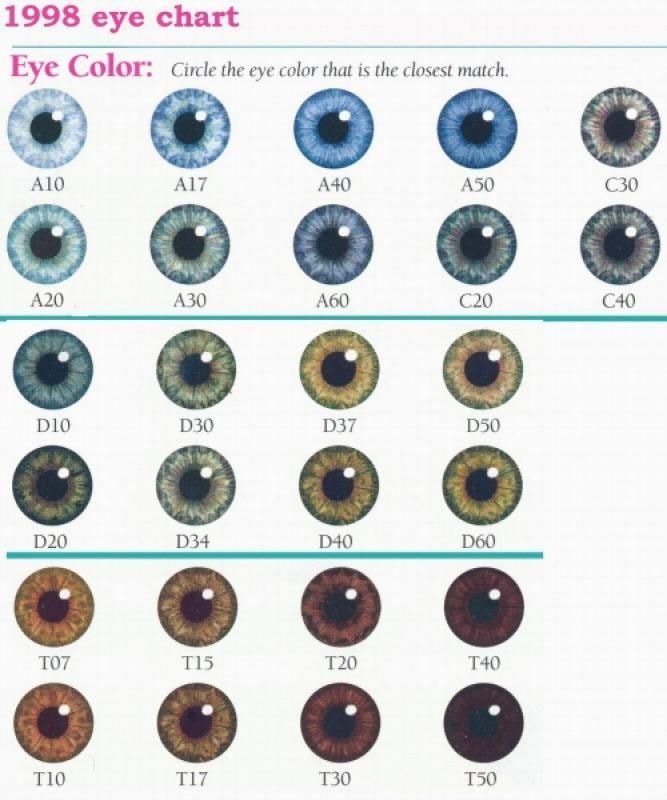
Commercial Method for Eye Color Classification
The modern beauty industry is continuously striving for perfection and individuality. One of the important aspects is selecting the right eye color, whether for cosmetic products, fashion collections, or even digital applications in the world of fashion and design. The commercial eye color scale, represented by codes such asA10, A17, A40, and others, has become a breakthrough in standardizing and systematizing the color palette. This approach not only allows for an accurate description of the shades but also helps in selecting the most suitable option for each individual task.Structure and Classification of the Scale
The scale is divided into several groups, indicated by letter prefixes, which make navigating the classification of shades easier:Series A
Shades with the prefix “A” (e.g., A10, A17, A40, A50, A60, A20) are generally associated with warmer and more saturated tones. These colors can range from light golden to deep amber hues. Thanks to this diversity, the A series is used in cosmetics to create a natural and warm look.Series D
Codes in the “D” series (D10, D20, D30, D34, D37, D40, D50, D60) represent darker, deeper, and more intense tones. These shades are often used to create dramatic images and emphasize contrast. In design and cosmetology, such colors are applied to highlight the eyes, create a smoky-eye effect, or add brighter accents.Series T
Shades with the prefix “T” (T07, T10, T15, T17, T20, T30, T40, T50) can be characterized as intermediate or transformative colors. They are used to create transitions between more contrasting shades, ensuring harmony and naturalness. These tones are often chosen for daytime makeup when a soft and delicate effect is required.This clear segmentation allows professionals not only to accurately describe the nuances of color but also to easily select the optimal combination for specific projects.